Wax Undercoating
Automotive wax undercoating is a specialized protective treatment designed to shield a vehicle's undercarriage from the relentless assault of moisture, road salt, and corrosive debris.
Unlike rubberized undercoatings that can sometimes trap moisture against the metal if they chip or crack, wax-based formulas are "self-healing." These paraffin- or oil-based compounds remain semi-pliable after application, allowing the coating to creep into tight crevices, welds, and frame rails where rust typically begins. This flexibility ensures that if the layer is nicked by a road pebble, the surrounding wax can migrate to reseal the gap.
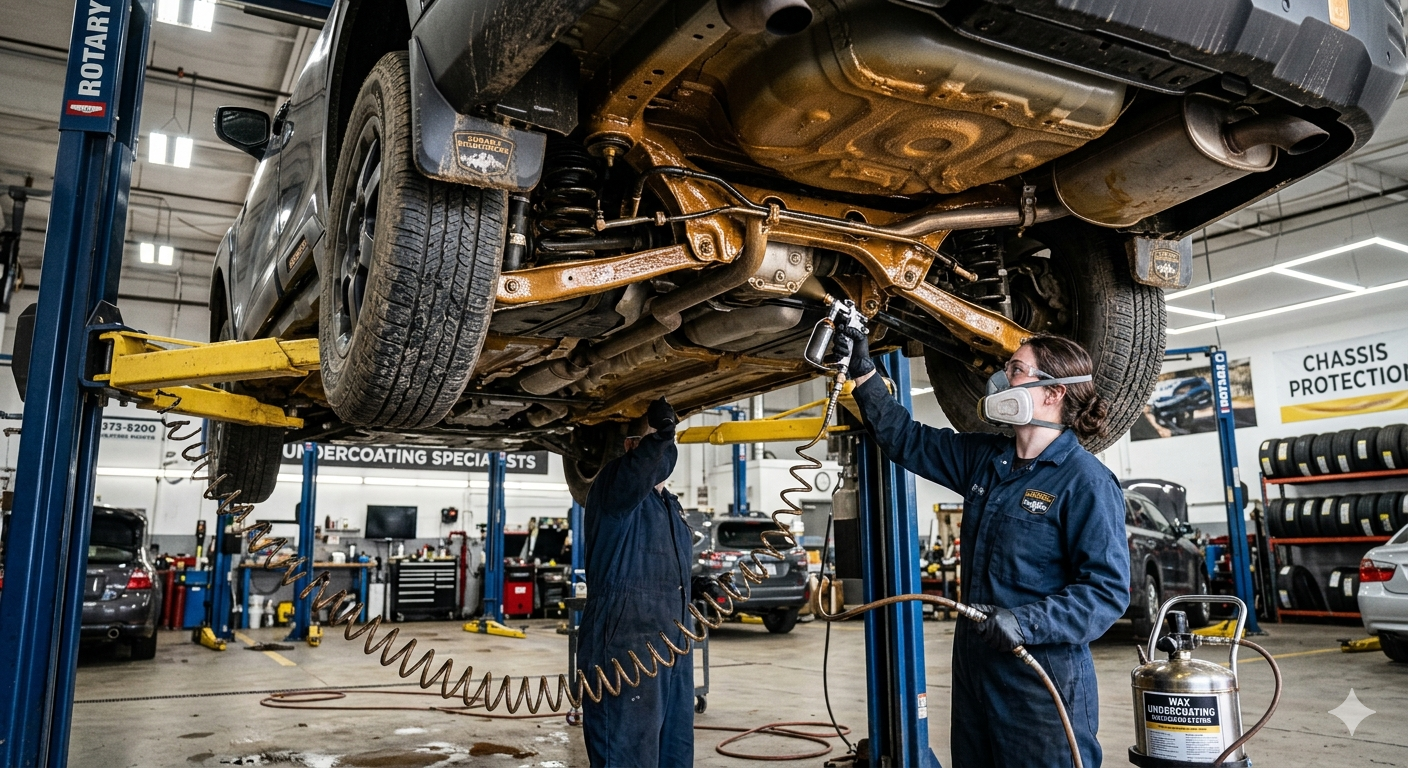
One of the primary advantages of wax undercoating is its ability to displace existing moisture and provide a hydrophobic barrier. When applied to a clean chassis, it creates a dull, waxy finish that prevents oxygen and water from reaching the iron and steel components. This is particularly effective for vehicles driven in "salt belt" regions or humid coastal environments. Furthermore, because it does not harden into a brittle shell, it is less likely to mask underlying issues, making it easier for technicians to inspect the frame and suspension components during routine maintenance.
From a long-term maintenance perspective, a wax-based application is often considered a "service" rather than a one-time modification. While it is highly durable, it is common practice to have the coating inspected and touched up every year or two to ensure continuous coverage, especially in high-abrasion areas like wheel wells. This proactive approach significantly extends the structural lifespan of the vehicle, preserving both its safety and its resale value by keeping the "bones" of the machine in showroom condition