Oil Undercoating
Automotive oil undercoating is a specialized preventive service designed to protect a vehicle's undercarriage from the destructive effects of rust and corrosion. Unlike traditional rubberized coatings that harden into a permanent shell, oil-based undercoating remains a "living," fluid barrier. This service is particularly vital for drivers in the "Salt Belt" or coastal regions, where road brine, rock salt, and humid air can rapidly oxidize exposed metal frames, fuel lines, and suspension components.
How It Works: The "Creeping" Advantage
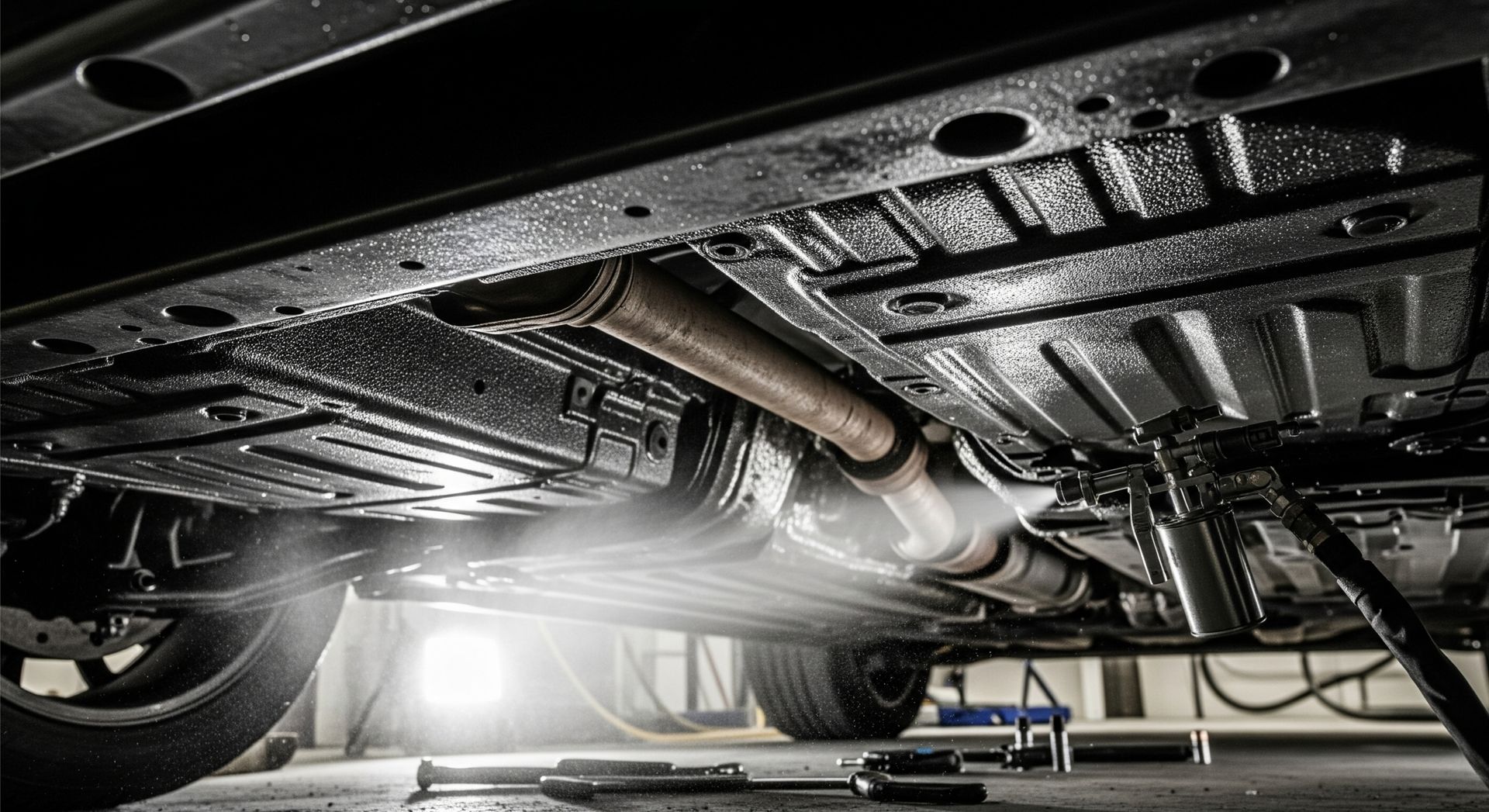
The primary benefit of an oil-based service is its ability to creep and self-heal. Because the oil (often lanolin-based or a specialized petroleum blend) never fully dries, it migrates into tight seams, spot welds, and crevices that hard coatings simply cannot reach.
- Active Displacement: The oil actually displaces existing moisture and oxygen, effectively "suffocating" the oxidation process.
- Self-Healing: If the undercarriage is scraped by debris or a speed bump, the surrounding oil flows back into the scratch to reseal the metal, whereas a rubberized coating would remain cracked, potentially trapping salt and water against the frame.
Oil vs. Rubberized Coatings
There is a significant debate between oil and rubberized options, and the choice often depends on the vehicle's age.
- Rubberized/Asphalt: These are best for brand-new vehicles. They provide excellent sound deadening and a clean black finish, but if they ever chip or crack, they can trap moisture underneath, causing "hidden" rust that you won't see until the panel fails.
- Oil-Based: These are the gold standard for used vehicles or those already showing light surface rust. Since oil penetrates through existing corrosion to reach the base metal, it stops the damage from spreading. The trade-off is that oil-based coatings are temporary and typically require annual reapplication to remain effective, as they can eventually be washed away by heavy road spray.
Environmental and Maintenance Considerations
Modern oil undercoating services have shifted toward more eco-friendly, non-toxic formulations that are safe for rubber bushings and electrical wiring. While the application can be slightly messy—some formulas may "drip" for a day or two after service—the long-term payoff is a significantly extended vehicle lifespan and higher resale value. A clean, oil-protected frame is often the first thing a savvy used-car buyer looks for in snowy climates.